March 25, 2026
Wine Cellar Cooling Units in Canada: What You Need to Know Before You Buy
Choosing a wine cellar cooling unit for a Canadian home means accounting for extreme temperature swings, basement construction, and insulation standards most US manufacturers ignore
Written and reviewed by
Panthaire HVAC Engineering Team · Licensed HVAC · Wine Cellar Cooling Specialists
The team that engineers APEX is the same team that ships it and answers the phone when installers call.
Last reviewed · July 2, 2026
Reading time
6 min
~1,209 words
Sizing a wine cellar? Get the right APEX unit for your room in two minutes.
Free BTU calculatorWine Cellar Cooling Units in Canada: What You Need to Know Before You Buy
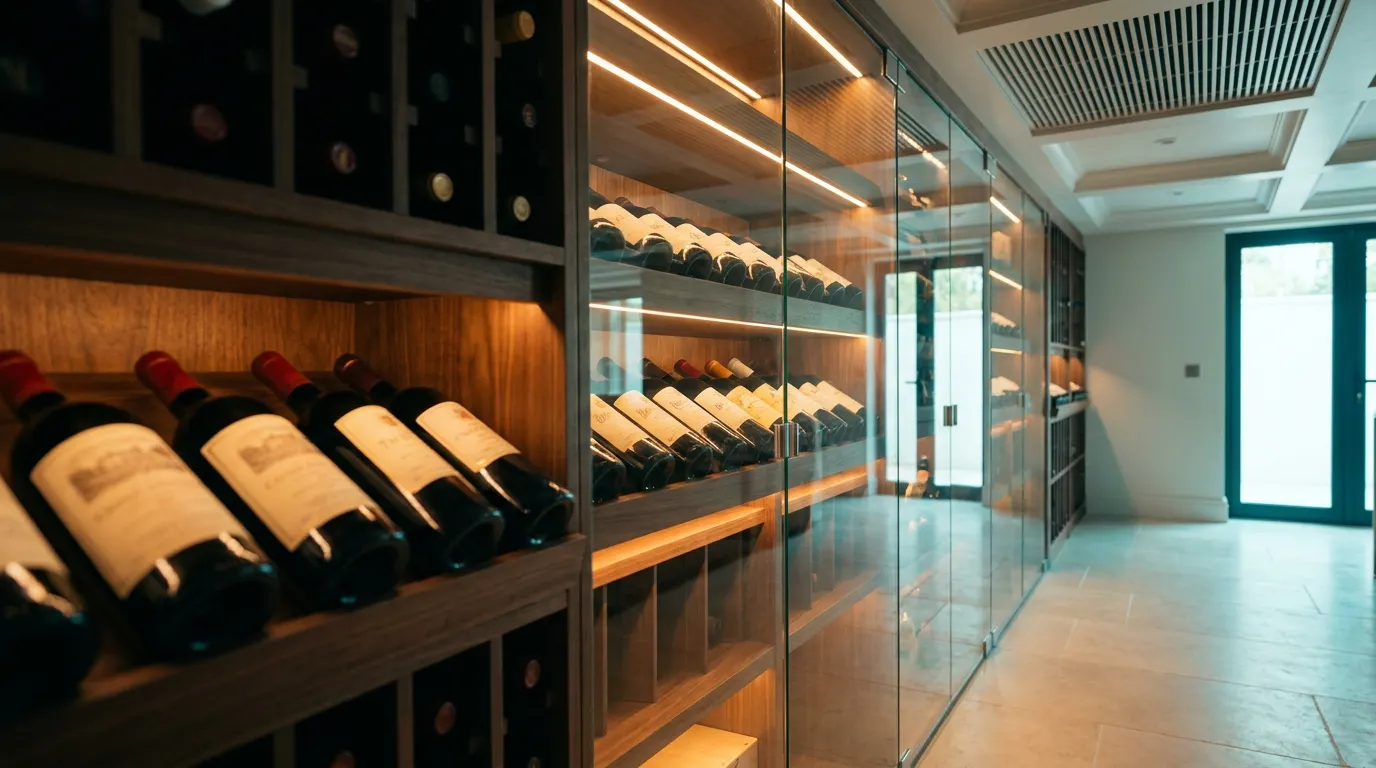
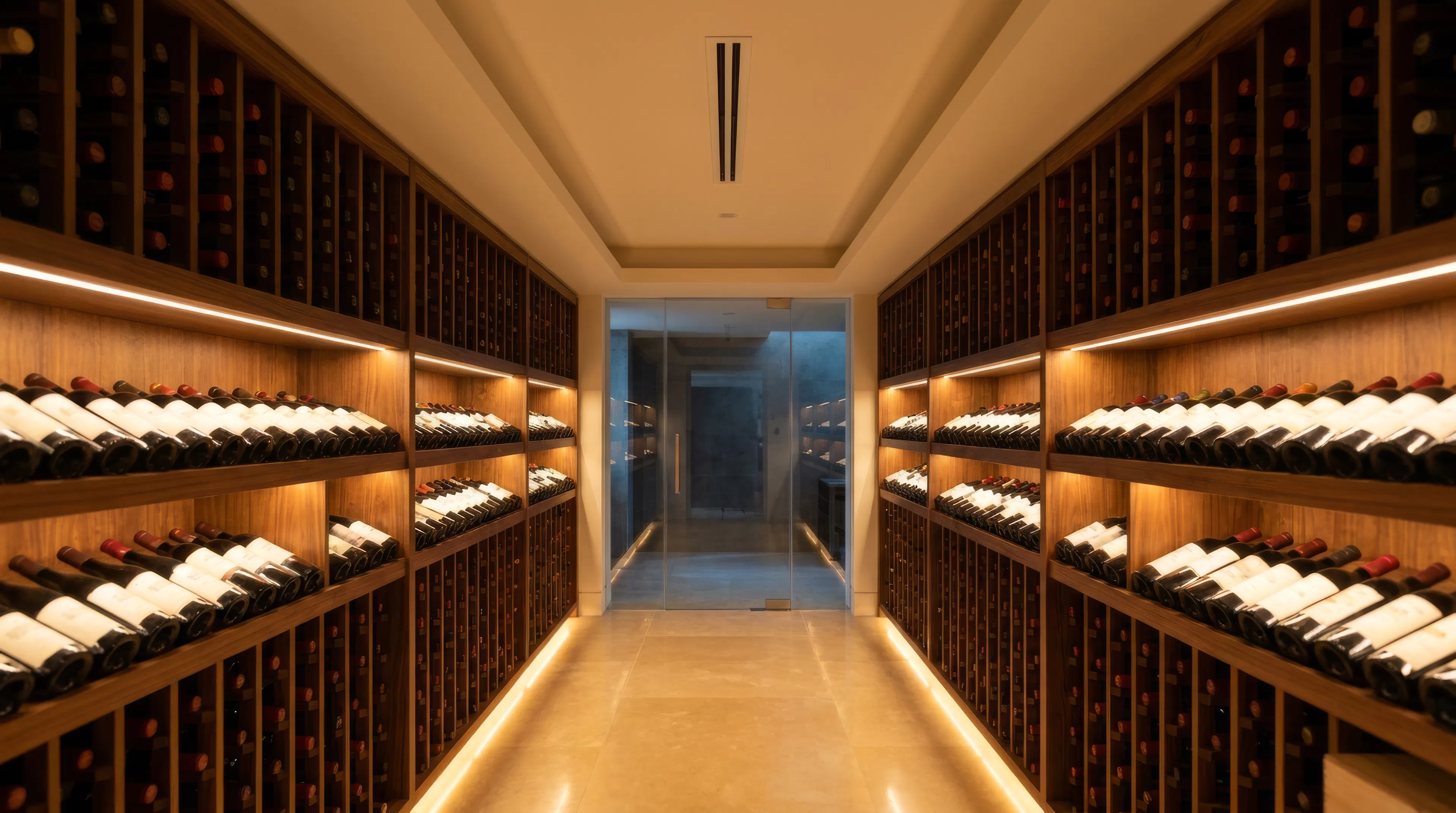
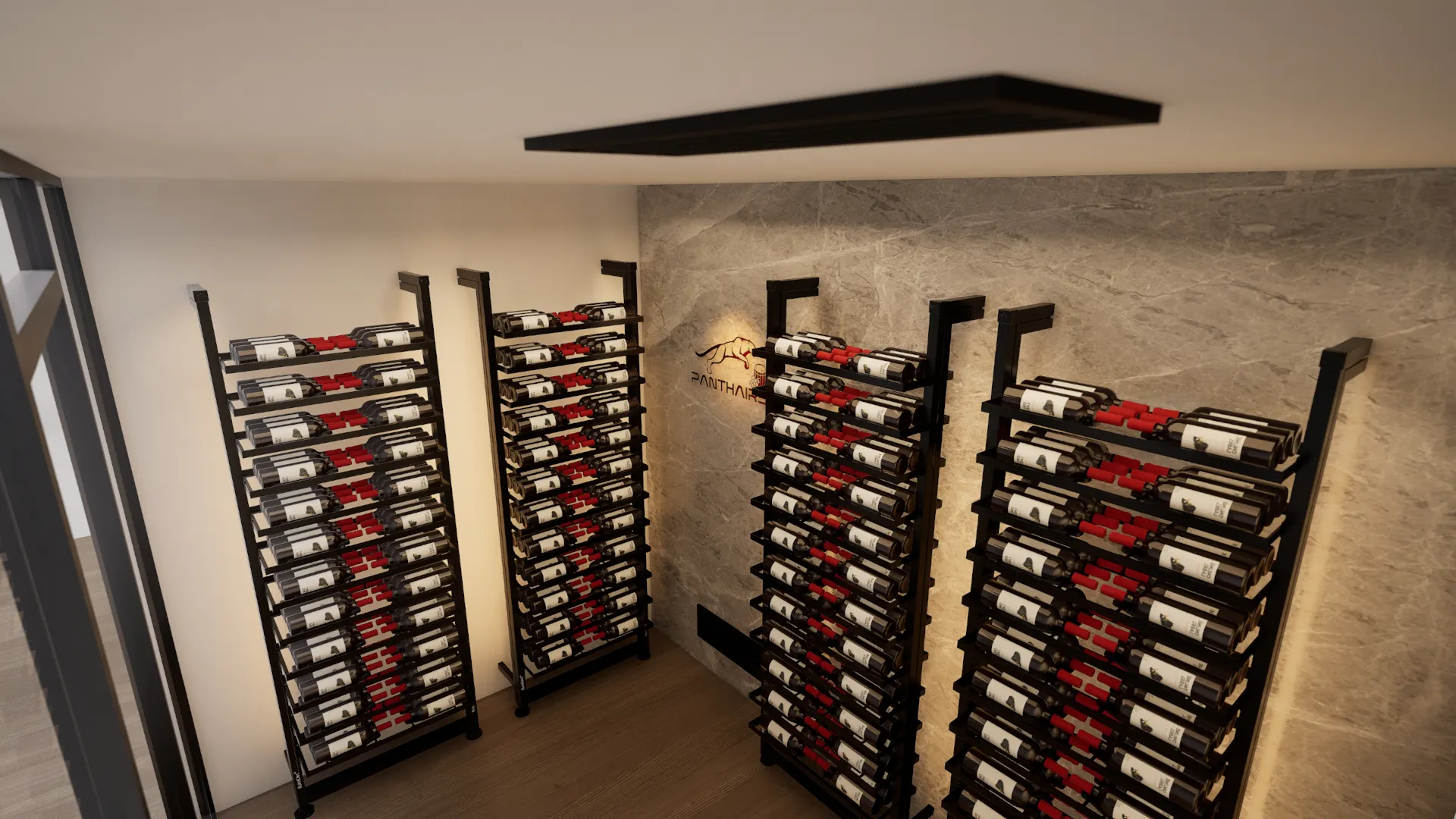
Most wine cellar cooling units sold in North America are designed for temperate climates. They are tested in controlled environments where the ambient temperature sits between 70 and 85°F year-round. That works in California. It does not reflect what happens in a Canadian basement in January or a mechanical room in July.
If you are building or upgrading a wine cellar in Canada, the cooling unit you choose needs to handle conditions that most manufacturers do not design for. Here is what matters and why it matters.
Canadian Homes Have a Different Thermal Profile
A wine cellar in Montreal, Toronto, Calgary, or Vancouver faces a wider temperature swing than one in Napa or Dallas. In winter, the mechanical room where a ducted unit sits may drop well below the cellar's target temperature. In summer, that same space can climb past 90°F if it shares air with a furnace or water heater.
This matters because cooling units are rated at specific ambient conditions. A unit rated for 3,500 BTU at 75°F ambient will not deliver that same output at 95°F. And a unit in a cold mechanical room in February may short-cycle or struggle with humidity control when the delta between ambient and cellar temperature shrinks to almost nothing.
Canadian installations demand a system that handles both extremes without manual intervention. That means looking beyond the BTU number on the spec sheet and understanding how the unit behaves across a full seasonal range.
Why Ducted Systems Make More Sense in Canadian Construction
Most Canadian homes with wine cellars are built on concrete foundations with basements. The cellar is typically in the basement. The mechanical room is nearby, sometimes adjacent, sometimes down a hallway or in a utility area.
Through-the-wall units require the warm side to exhaust into a space that can absorb heat. In a tight Canadian basement, that heat has nowhere to go. The exhaust side raises the ambient temperature in the mechanical space, which forces the unit to work harder, which generates more heat. It is a feedback loop that reduces efficiency and shortens compressor life.
A ducted system eliminates this problem. The unit sits in the mechanical space and moves conditioned air through insulated ductwork. Supply and return air are separated. Heat is managed independently. The cellar stays quiet, and the equipment stays accessible for maintenance without entering the wine room.
For Canadian basements specifically, ducted systems also solve a practical problem: most wine cellars here share walls with living spaces. A through-the-wall unit transmits vibration and low-frequency hum directly through the structure. In a ducted configuration, the cellar wall has no mechanical penetration other than two duct grilles.
Insulation Standards and Vapor Barriers in Cold Climates
Building a wine cellar in Canada without a proper vapor barrier is one of the most common and most expensive mistakes. In winter, the dew point differential between a 55°F cellar and a heated basement can cause condensation inside the wall cavity. Over time, this leads to mold, wood rot, and insulation failure.
The vapor barrier must be on the warm side of the insulation, fully sealed at every seam, penetration, and junction. R-20 insulation is the minimum standard for walls and ceiling. If the cellar shares a slab with an unheated garage or crawl space, the floor needs insulation as well.
A properly insulated cellar reduces the load on the cooling unit, which means the system runs less frequently, operates more quietly, and lasts longer. It also makes accurate sizing possible. Without proper insulation, no BTU calculator will give you a reliable number.
R290 Refrigerant: The Regulatory Direction Is Clear
Canada and the United States are both moving away from high-GWP refrigerants. R134a, which is still used in the majority of wine cellar cooling units on the market, has a global warming potential of 1,430. It is already restricted in new equipment in the European Union and faces increasing regulatory pressure in North America.
R290 (propane) has a GWP of 3. That is not a typo. Three versus fourteen hundred and thirty.
Beyond the environmental argument, R290 is a more efficient refrigerant. It requires a smaller charge, operates at lower pressures, and delivers consistent performance across a wider ambient temperature range. For a wine cellar application where the system runs continuously for years, that efficiency compounds into real energy savings and longer compressor life.
The Panthaire APEX series uses R290 exclusively. Every unit in the line, from the APEX 3500 to the APEX 7000, is engineered around this refrigerant from the ground up. It is not a retrofit or an adaptation of an R134a platform. The system architecture, charge calculation, and safety design are all built for R290.
Sizing a Cooling Unit for a Canadian Wine Cellar
Proper sizing depends on five variables: cellar volume in cubic feet, insulation R-value, ambient temperature of the mechanical space, glass surface area, and lighting load. Most online calculators account for the first two and ignore the rest.
In Canada, the ambient temperature variable is critical. If the mechanical room reaches 95°F in summer, you need to size for that peak, not for the average. If the cellar has a glass wall facing a heated living space, the heat load through that glass is significant and continuous.
The APEX 3500 handles cellars up to 900 cubic feet with R-20 insulation and moderate ambient conditions. The APEX 5000 covers up to 1,200 cubic feet. The APEX 7000 handles up to 2,000 cubic feet and is designed for commercial applications or residential cellars with high heat loads such as full glass enclosures or southern exposures.
If you are unsure about sizing, share your cellar dimensions, insulation plan, and mechanical room conditions. Oversizing is as problematic as undersizing. An oversized unit short-cycles, fails to control humidity, and wears out prematurely.
Shipping, Support, and Warranty from a Canadian Manufacturer
Panthaire is engineered and supported from Canada. That means direct shipping within Canada with no cross-border customs delays or brokerage fees. It means warranty support in your time zone, in English and French. It means technical documentation that accounts for Canadian building practices, not just US construction standards.
Every APEX unit ships with a two-year warranty covering parts and labor. Support is direct from the manufacturer, not routed through a third-party distributor or call center.
For US customers, Panthaire ships across the border through its distribution network with full support coverage.
Next Steps
Use the Panthaire BTU calculator to confirm your cellar requirements. Share your room dimensions, insulation plan, and mechanical room layout. We review every submission and confirm sizing before you order.
If you are working with a contractor or wine cellar designer, we provide technical documentation and installation guides so the install goes right the first time. The APEX system is designed for straightforward installation: connect ductwork, make the drain connection, plug it in.
If you are early in your research, start with our complete guide to wine cellar cooling systems to understand the options before diving into the Canadian specifics.
No copper lines. No licensed refrigeration technician. No complicated mechanical buildout.
Contact Panthaire or explore the APEX 3500, APEX 5000, and APEX 7000 to find the right system for your cellar.
Panthaire APEX
Not sure which cooling unit your cellar needs?
Panthaire APEX systems ship direct to all 48 contiguous U.S. states — engineered and assembled in Canada, free shipping, 2-year parts and labor warranty. Enter your room dimensions, glass area, and insulation and the calculator recommends the right unit.