March 30, 2026
R290 Refrigerant in Wine Cellar Cooling: What It Is, Why It Matters, and Who Uses It
R290 natural refrigerant delivers higher efficiency, lower environmental impact, and stable cellar temperatures. Learn why it is replacing R410A and R134a in wine cooling systems.
Written and reviewed by
Panthaire HVAC Engineering Team · Licensed HVAC · Wine Cellar Cooling Specialists
The team that engineers APEX is the same team that ships it and answers the phone when installers call.
Last reviewed · July 2, 2026
Reading time
8 min
~1,592 words
Key takeaways
- R290 is propane in refrigerant form, and its global warming potential is 3. R410A's is 2,088, which is the main reason the wine-cooling industry is switching.
- The U.S. AIM Act, the EU F-Gas Regulation, and Canadian rules are all phasing out HFCs like R410A and R134a. Equipment built for R290 stays serviceable through that shift.
- R290 is more thermodynamically efficient at wine-storage temperatures, so a system built around it cools as well or better while drawing less power.
- The refrigerant charge is factory-sealed and stays well below the UL/IEC 60335-2-89 safety limits. Neither the homeowner nor the installer ever handles it.
- Self-contained ducted systems like the Panthaire APEX arrive sealed, so no refrigeration technician is needed. The install is ductwork, electrical, and condensate, which is standard mechanical-contractor work.
- APEX runs R290 across the range (3500, 5000, 7000) and ships with a 2-year parts-and-labor warranty and North American support.
Sizing a wine cellar? Get the right APEX unit for your room in two minutes.
Free BTU calculatorR290 Refrigerant in Wine Cellar Cooling: What It Is, Why It Matters, and Who Uses It
Wine cellar cooling systems run on refrigerant. The type of refrigerant inside the unit determines how efficiently it cools, how long the compressor lasts, and what happens to the atmosphere if the sealed system ever leaks.
Most wine cellar cooling units sold in North America still use R410A or R134a. Both are hydrofluorocarbons with high global warming potential. Both are being phased down under federal regulation in the United States and Canada. Neither will be available at current volumes within the next decade.
R290 is different. It is a natural refrigerant - chemically identical to propane - with a global warming potential of 3. For comparison, R410A carries a GWP of 2,088. That is not a rounding error. It is a factor of nearly 700.
This article explains what R290 means for wine cellar cooling, why the industry is moving toward it, and what collectors, contractors, and designers should consider when specifying a system in 2026 and beyond.
What Is R290 Refrigerant?
R290 is the ASHRAE designation for propane (C3H8), a naturally occurring hydrocarbon. It has been used in commercial and domestic refrigeration across Europe for over two decades, particularly in sealed systems like household refrigerators, bottle coolers, and display cases.
Its relevance to wine cellar cooling comes down to five properties.
Global Warming Potential (GWP): 3. The lowest GWP of any refrigerant commonly used in cooling equipment. R410A sits at 2,088. R134a sits at 1,430. In leakage terms, R290 is effectively climate-neutral.
Ozone Depletion Potential (ODP): Zero. R290 has no impact on the ozone layer. It is not subject to Montreal Protocol restrictions.
Thermodynamic efficiency. R290 has a high latent heat of vaporization, meaning it absorbs more thermal energy per gram of refrigerant circulated. In practice, this translates to lower energy consumption at the same cooling output - a meaningful advantage for a system that runs continuously in a wine cellar.
Lower operating pressures. R290 operates at lower discharge pressures than R410A, which reduces mechanical stress on the compressor and sealed system. Lower stress extends component life. For a wine cellar unit expected to run 24 hours a day for 10 to 15 years, this matters.
Small charge size. Because R290 is classified as mildly flammable (A3), it is used in factory-sealed systems with charge sizes typically under 150 grams. This is well within the safety thresholds defined by IEC 60335-2-89 and UL 60335-2-89 for self-contained commercial refrigeration. The refrigerant never needs to be handled in the field.
Why the Wine Cellar Industry Is Moving to R290
The transition is not a preference. It is regulatory.
The AIM Act (United States)
The American Innovation and Manufacturing Act, signed into law in December 2020, directs the EPA to reduce HFC production and consumption by 85 percent by 2036, following a stepdown schedule aligned with the Kigali Amendment to the Montreal Protocol.
R410A and R134a are both HFCs subject to this phasedown. For manufacturers of wine cellar cooling equipment, this means rising refrigerant costs, tightening supply allocations, and eventual unavailability for new production. The residential HVAC industry has already begun transitioning to lower-GWP alternatives (R454B, R32). The specialty cooling segment - including wine cellar systems - is following.
The F-Gas Regulation (European Union)
The EU's revised F-Gas Regulation (2024) bans the use of refrigerants with a GWP above 150 in most new self-contained refrigeration equipment. R290, at GWP 3, falls comfortably below this threshold. European manufacturers of wine cellar and hospitality cooling equipment have already shifted production.
Canada's Regulations
Canada's Ozone-depleting Substances and Halocarbon Alternatives Regulations follow the Kigali Amendment timeline. The Canadian market is phasing down HFCs in parallel with the United States and Europe.
For anyone purchasing a wine cellar cooling system in 2026, the regulatory direction is clear: HFC-based systems are being phased out. Natural refrigerants like R290 are replacing them. Choosing a system that already uses R290 avoids a future where replacement refrigerant becomes scarce or expensive - and where the system itself becomes a legacy product before the end of its useful life.
R290 vs R410A vs R134a: Side-by-Side Comparison
PropertyR290R410AR134aGlobal Warming Potential32,0881,430Ozone Depletion Potential000Energy efficiency (COP)HigherModerateModerateTypical operating pressureLowerHigherModerateCharge size (wine cellar unit)Under 150 g500 - 1,500 g400 - 1,200 gRegulatory status (2026)Fully compliantPhasedown in progressPhasedown in progressLong-term refrigerant availabilityStable, abundantDeclining allocationsDeclining allocationsField servicing of refrigerantNot required (sealed)Requires certified HVAC techRequires certified HVAC tech
The practical differences for wine cellar owners and contractors break down into four areas.
Lower energy costs. R290 systems consume less electricity to maintain the same temperature setpoint. In a cellar that runs 24 hours a day, 365 days a year, this compounds across the life of the equipment.
Longer compressor life. Lower discharge pressures reduce mechanical wear. Components run cooler, quieter, and under less strain. A system designed around R290 thermodynamics from the ground up - not retrofitted from an HFC platform - can deliver a meaningfully longer service life.
No refrigerant obsolescence. R290 is propane. It is not a synthetic chemical subject to regulatory phase-out. There is no scenario in which R290 supply becomes restricted, rationed, or discontinued. The system you install today will have access to the same refrigerant in 2040.
Simpler maintenance. Because R290 wine cellar systems are factory-sealed with a small charge, there is no field-serviceable refrigerant circuit. No evacuation, no recharging, no recovery. Filter changes, condensate drain checks, and electrical inspection cover the routine maintenance scope.
What R290 Means for Wine Cellar Design
For architects, designers, and contractors specifying wine cellar cooling equipment, R290 introduces a few design considerations worth noting.
No refrigerant lines to run. Self-contained R290 ducted systems arrive factory-charged and sealed. The installer connects ductwork, a condensate drain, and power. There is no need for a licensed refrigeration technician to braze copper lines, pressure-test, evacuate, or charge the system. This reduces installation cost, time, and the number of trades involved.
Compliance-ready specifications. For commercial projects, hospitality builds, and high-end residential developments where building codes and green building standards (LEED, WELL, Passive House) are in play, R290 systems simplify compliance. They meet or exceed current and anticipated refrigerant GWP thresholds without requiring exemptions or alternative compliance paths.
Smaller mechanical footprint. Because the charge is small and the system is self-contained, there are no outdoor condensing units, no linesets through walls, and no refrigerant detection requirements beyond what the manufacturer builds into the unit. The entire cooling system occupies one location - a utility space, mechanical closet, or adjacent room - with ductwork to and from the cellar.
Who Is Using R290 in Wine Cellar Cooling Today?
Adoption of R290 in the wine cellar cooling segment is still early in North America. Most established brands continue to ship systems based on R410A or R134a. The transition is underway, but product availability varies.
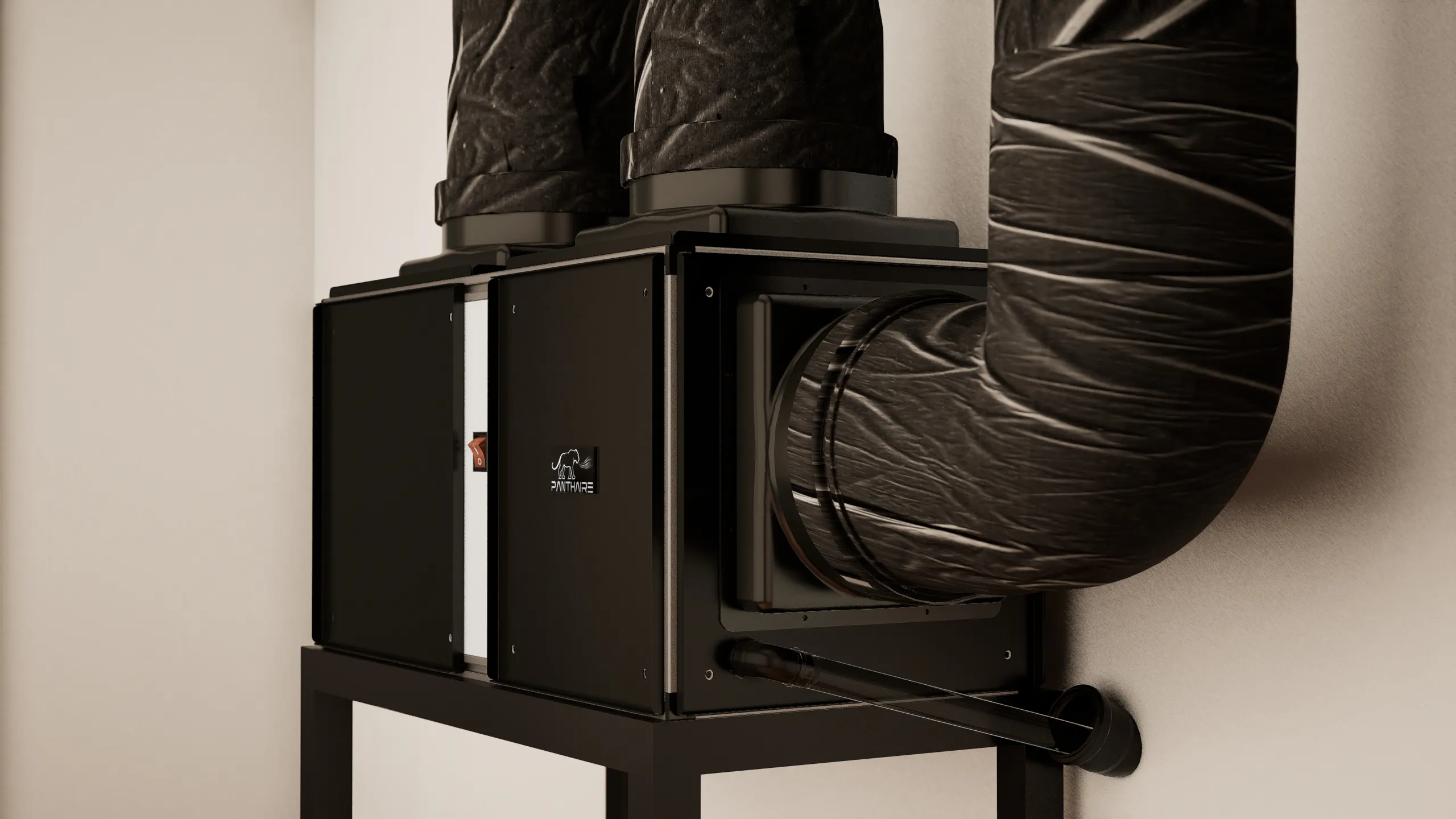
Panthaire APEX systems - the APEX 3500, APEX 5000, and APEX 7000 - are engineered from the ground up around R290 refrigerant. These are fully ducted, self-contained units designed and assembled in Canada for both the Canadian and US markets. The R290 platform was not a retrofit or a refrigerant swap on an existing HFC design. The compressor selection, heat exchanger geometry, and charge optimization were developed specifically for R290 thermodynamic properties.
For contractors and designers evaluating cooling systems in 2026, the question is straightforward: specify a system that aligns with where the industry is going, not where it has been.
Frequently Asked Questions
Is R290 safe for residential use? Yes. R290 is used in millions of household refrigerators and freezers worldwide. In wine cellar cooling applications, the refrigerant charge is factory-sealed and well below the safety limits defined by UL 60335-2-89 and IEC 60335-2-89. The refrigerant is never handled by the homeowner or installer.
Does R290 cool as well as R410A? R290 has superior thermodynamic efficiency per unit of mass. In properly engineered systems, it delivers equal or better cooling performance at lower energy consumption. The key is that the system must be designed for R290 from the start - not adapted from an HFC platform.
Will R410A still be available for servicing existing systems? Yes, for the near term. The AIM Act phases down production, not use. Existing R410A systems can be serviced with reclaimed or remaining stock. However, refrigerant costs are expected to rise as supply tightens, and new R410A equipment will become increasingly difficult to source.
Do I need a special technician to install an R290 wine cellar system? For self-contained ducted systems like the Panthaire APEX, no refrigeration technician is required. The system arrives factory-sealed. Installation involves ductwork, electrical, and condensate plumbing - standard mechanical contractor scope.
What is the warranty on an R290 wine cellar system? Panthaire APEX systems include a 2-year parts and labor warranty with North American support. Warranty terms may vary by manufacturer for other R290-based products entering the market.
The Takeaway
The refrigerant inside your wine cellar cooling system is not a detail. It determines energy cost, compressor longevity, regulatory compliance, and long-term serviceability. R290 addresses all four.
The wine cellar cooling industry is moving toward natural refrigerants. The regulatory framework in the United States, Canada, and Europe is accelerating that shift. Choosing a system built on R290 today means installing equipment that is engineered for the next 15 years of operation - not the last 15 years of refrigerant policy.
Explore the Panthaire APEX 3500, APEX 5000, and APEX 7000 to find the right ducted cooling system for your project. Use the Wine Cellar Assessment Tool to calculate your BTU requirements, or contact our team for specification support.
Panthaire APEX
Not sure which cooling unit your cellar needs?
Panthaire APEX systems ship direct to all 48 contiguous U.S. states — engineered and assembled in Canada, free shipping, 2-year parts and labor warranty. Enter your room dimensions, glass area, and insulation and the calculator recommends the right unit.